
Disruptive and environmentally friendly sealing solutions for the mining industry
Mining operations face a growing challenge: how to meet rising production demands while cutting resource consumption and emissions. Around the world, operators are reevaluating how critical equipment, such as slurry pumps, can operate more efficiently, consume less water and deliver a longer service life.
Advanced sealing technologies are driving this transformation, engineered to withstand the industry’s harshest conditions while helping mining operations achieve their sustainability goals.
The shift to disruptive, eco-efficient sealing
Every concentrator, regrind circuit and tailings system depends on pumps that handle abrasive slurries containing suspended and dissolved solids. These fluids are essential to mineral recovery, but they also accelerate equipment wear and increase maintenance, energy and water use.
Historically, many pumps relied on packing or conventional single seals that required continuous gland water flow—often tens of litres per minute per pump—to maintain lubrication and prevent overheating. Across an entire mining operation, this can translate into millions of litres of water consumed every year.
To meet stricter ESG and decarbonisation goals, operators are adopting more sustainable sealing practices that minimise water use, extend seal life and improve reliability. These solutions can be supported locally. For example, at John Crane’s service centre in Lima, Peru, engineers provide seal refurbishment, support system manufacture and coupling balancing to API 671 standards, enabling mines to implement technology upgrades with confidence and minimal downtime.
Mechanical seals for slurry pump performance
In abrasive, high-solids mining applications, mechanical seals offer a cleaner and more efficient alternative to traditional packing in centrifugal and slurry pumps. They control leakage at the seal face rather than relying on constant gland water flow, helping reduce energy consumption.
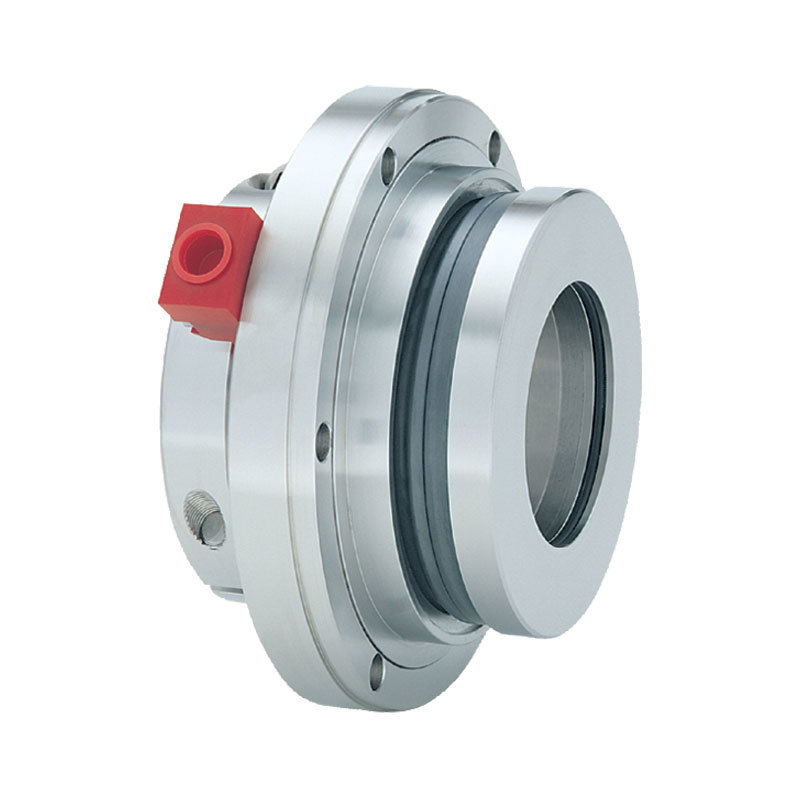
Type 5840, Type 5860/5864 and Type 5870 mechanical seals are designed to:
- Withstand abrasive fluids with durable materials and balanced designs.
- Enhance efficiency by minimising friction and reducing water consumption.
- Simplify maintenance through replaceable wear parts and easy installation.
- Deliver reliability across varying pressures, temperatures and solids content.
Across tailings, regrind and clarifier circuits, these seals provide consistent performance, longer service intervals and reduced environmental impact.
The science behind diamond coating
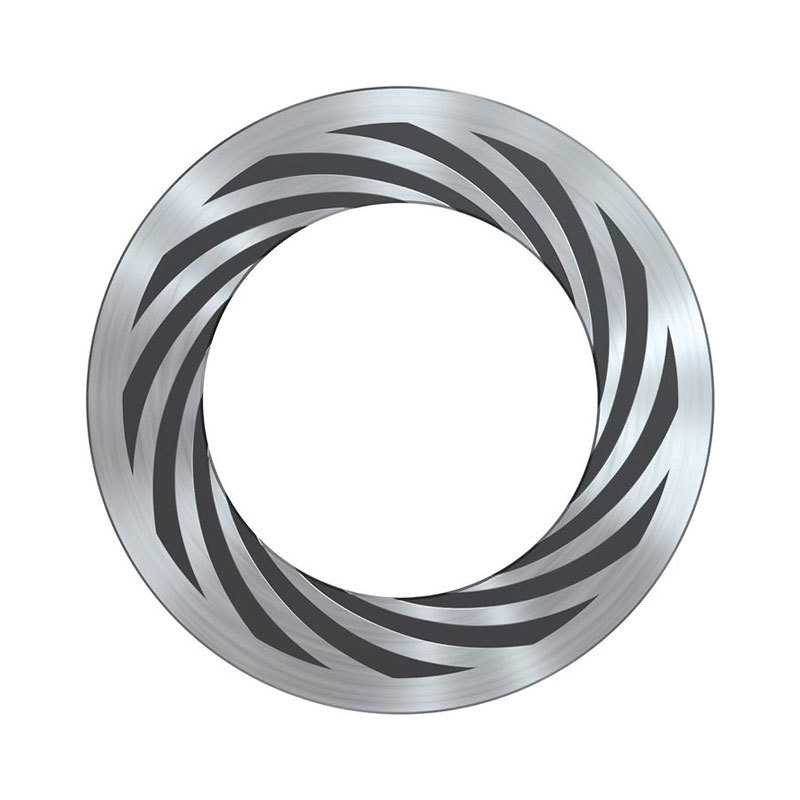
Diamond is one of the hardest known materials, offering exceptional resistance to wear and heat. To harness these properties for mechanical seals, a process called Chemical Vapour Deposition (CVD) is used to grow a thin, uniform layer of pure diamond directly onto the seal face. During deposition—at temperatures approaching 800°C—carbon atoms bond tightly to the substrate, forming a smooth, durable surface that remains stable under extreme operating conditions.
John Crane Diamond® applies this technology to create seal faces with ultra-low friction and exceptional thermal conductivity. In abrasive slurry and high-temperature pump applications, this results in cooler operation, reduced energy losses and extended seal life, enhancing reliability while lowering maintenance and water usage.
By combining advanced materials science with proven field performance, diamond-coated seal faces help mines achieve operational efficiency and sustainability gains.
Reducing water use with Upstream Pumping technology
A major advancement featured in recent field applications, Upstream Pumping (USP) technology is one of the most effective approaches to reducing seal-water consumption in mining.
Instead of relying on high-volume flush systems, USP uses a controlled flow of process or barrier fluid to lubricate the seal faces. This isolates the interface from process contamination, eliminating the need for high-pressure external flush water and complex pressurised seal support systems.
By maintaining a stable, low-friction film between seal faces, USP designs also reduce heat generation and auxiliary power demand, supporting improved pump efficiency alongside significant water savings.
The Type 5864 dual USP seal combines this face design with flexible mounting options and corrosion-resistant materials, including silicon carbide, Hastelloy C springs and duplex stainless-steel hardware. This combination ensures dependable, low-maintenance operation in demanding slurry conditions.
Proven results in water reduction
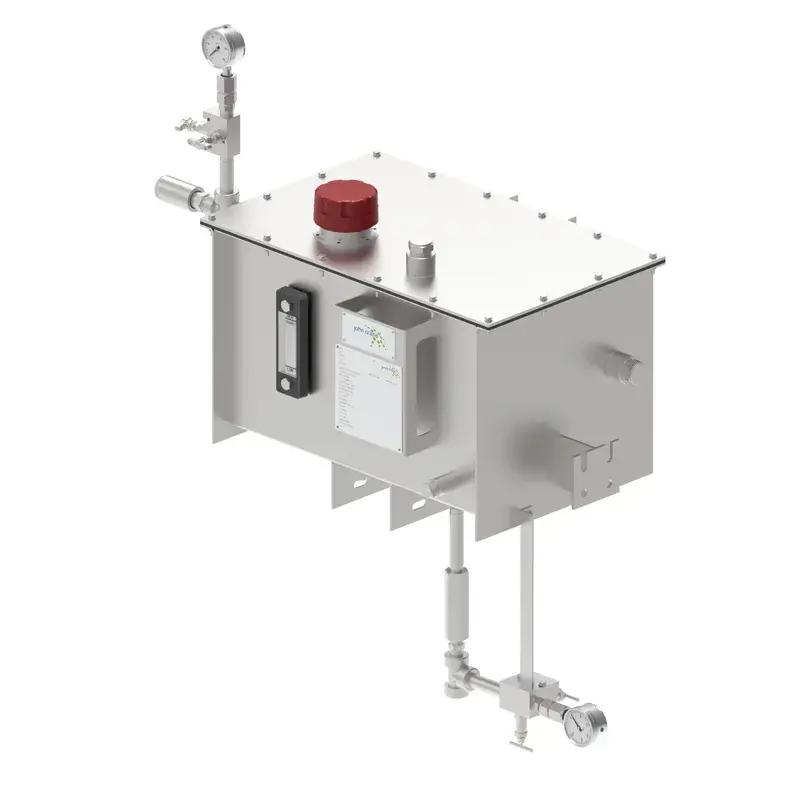
When integrated with Global Standard USP (GS USP) pump support systems, the impact is dramatic:
- A typical gland using conventional water injection consumes approximately 40 litres per minute, equivalent to roughly 21 million litres of water per pump per year.
- A standard single slurry seal can cut that to around 2 million litres per year.
- A USP slurry seal goes even further, reducing usage to approximately 2,000 litres per year, or 7 litres per day.
That represents a 99.99% reduction in seal water consumption, saving tens of millions of litres annually across multi-pump installations.
Supporting ESG and decarbonisation targets
For global mining companies, sustainability metrics are no longer optional—they are central to operational strategy. Technologies that reduce frictional losses, eliminate wasted water and extend equipment life directly contribute to lower carbon footprints and improved ESG performance.
By deploying mechanical seals, USP designs and diamond-coated faces, operators can:
- Increase mean time between failure (MTBF) and reduce unplanned maintenance.
- Lower auxiliary-equipment costs by removing complex barrier-fluid systems.
- Reduce energy use through lower friction and cooler operation.
- Minimise waste and emissions associated with water treatment and disposal.
These benefits deliver both immediate operational efficiency and long-term sustainability gains, which are key objectives for any modern mining operation.
Advancing sustainable mining through innovation
Delivering reliable, efficient and sustainable mining operations requires both advanced technology and expert implementation. Across the global mining industry, John Crane’s engineering and service teams work closely with customers to optimise performance, reduce resource consumption and extend equipment life.
By combining global expertise with local support, we help mining operators implement innovative sealing strategies that enhance reliability, reduce emissions, and advance long-term sustainability goals, driving the industry toward the next generation of responsible mining.
This blog is based on the presentation, “Disruptive and Environmentally Friendly Sealing Solutions for the Mining Industry.” This was presented at the PERUMIN 37 Mining Convention by Warren Smith, John Crane’s Senior Business Development Manager of Global Mining.