
Seal arrangements

Arrangement 1(Single seal)

Seal configurations having one seal per cartridge assembly.
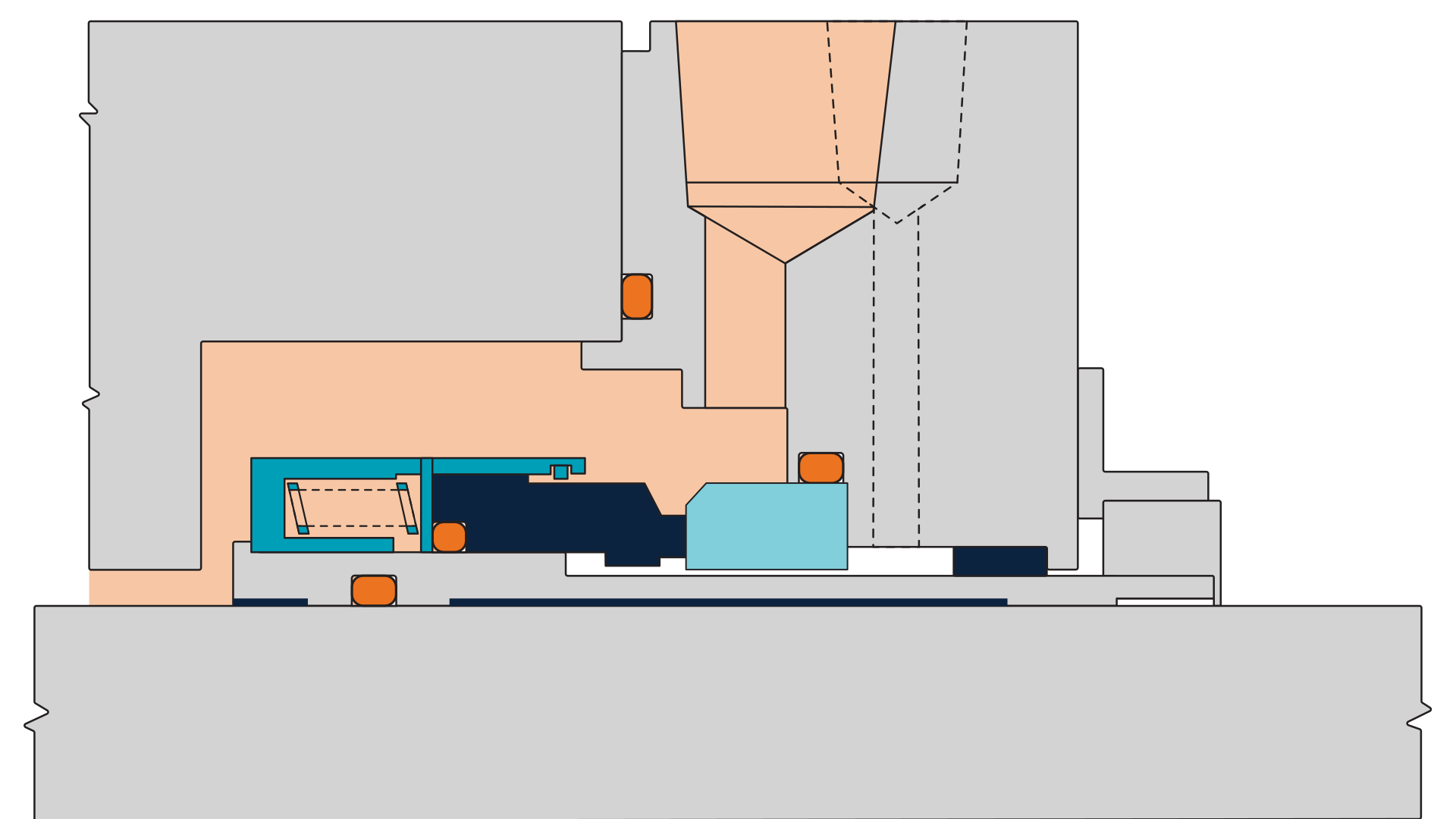
These are the simplest mechanical seals within the scope of API 682.

The mechanical seal is cooled and lubricated by the process liquid, and a small amount of the process liquid will leak across this seal and escape to atmosphere. Outboard of the mechanical seal, an API Arrangement 1 seal will typically have a secondary containment device such as a bush. This device will help to contain the leakage and direct it towards a drain port in the seal cartridge.

Because the seal is lubricated by the process fluid, Arrangement 1 seals are only suitable for process fluids which are good lubricants for mechanical seals.

Because a small amount of process fluid leaks to atmosphere, Arrangement 1 seals are only suitable for process fluids which do not create safety or environmental hazards if they escape to atmosphere.

API 682 specifies that all mechanical seals are cartridge seals as they have superior reliability. Component seals are not acceptable in API 682. In addition, several features within the hardware of the seal cartridge are specified in API 682, such as the size and location of ports, clearances between rotating and stationary parts, and the features ensuring that the seal is correctly located onto the pump casing and shaft.

Arrangement 1 seals will usually have two API piping plans fixed to them, one in the inboard zone, to provide a flow of process liquid for cooling and lubrication, and one in the outboard zone, to collect leakage, or provide a quench to keep the outboard zone clean. As there is only a single seal within the cartridge, there is no buffer/barrier zone.
Arrangement 2 (Dual-unpressurised)

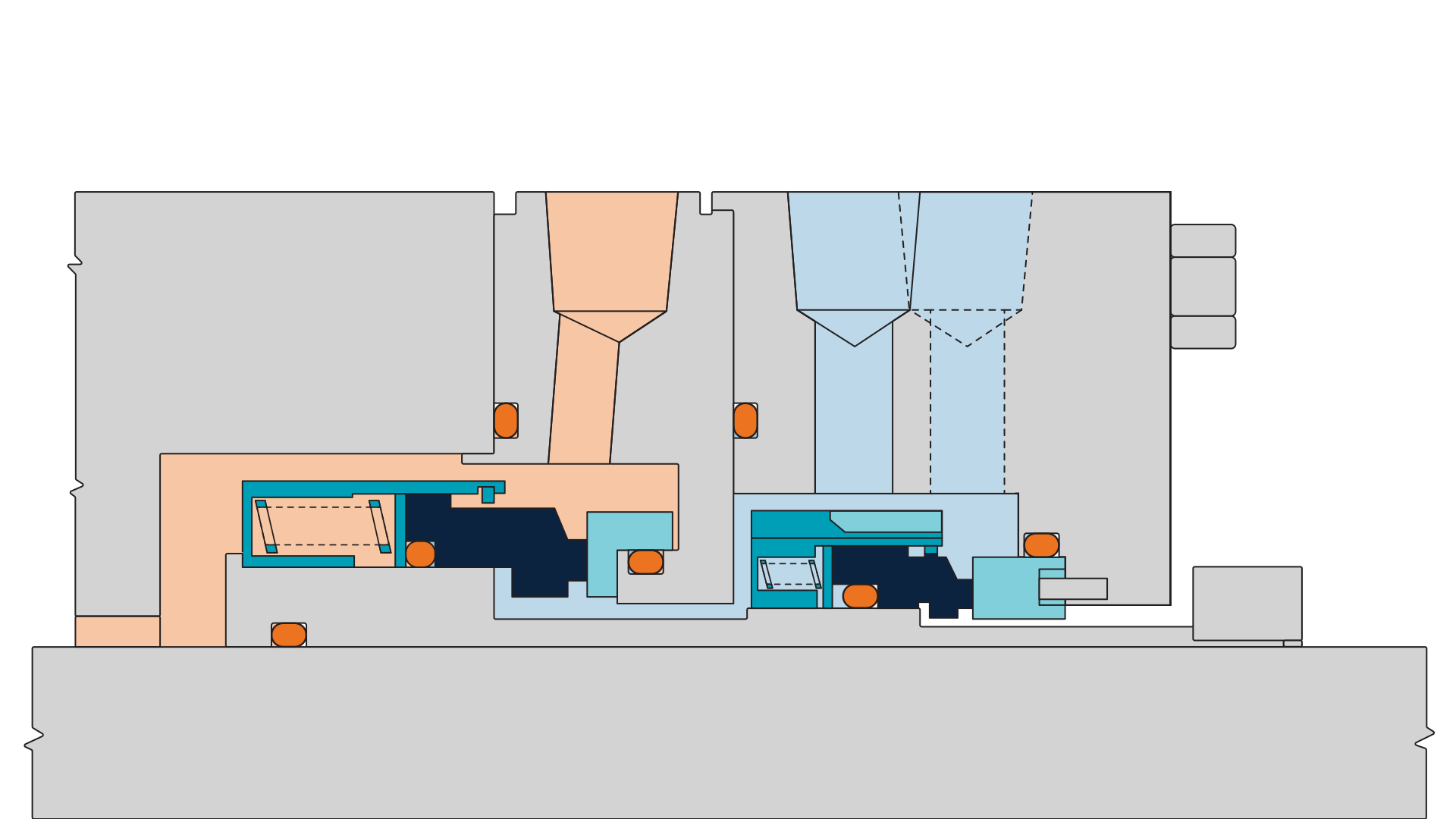
Seal configuration having two seals per cartridge assembly, with the space between the seals at a pressure less than the seal chamber pressure.

The seal closest to the pump impeller is referred to as the inboard seal. The seal furthest from the pump impeller is referred to as the outboard seal. The space between the two seals is referred to as the buffer zone and is filled with a clean buffer fluid. This could be a liquid, or an inert gas.

The inboard mechanical seal is cooled and lubricated by the process liquid, and a small amount of the process liquid will leak across this seal into the buffer zone. The outboard seal runs on the clean buffer fluid, and a small amount of the buffer fluid will escape to atmosphere. The buffer fluid will be contaminated by a small quantity of the process fluid, as it leaks across the inboard seal, and a very small amount of process fluid will also leak across the outboard seal and escape to atmosphere.

Because the inboard seal is lubricated by the process fluid, Arrangement 2 seals are only suitable for process fluids which are good lubricants for mechanical seals.

Because most of the process fluid which leaks across the inboard seal is contained by the outboard seal, Arrangement 2 seals are suitable for some hazardous process fluids. They are often used for flashing hydrocarbons, and other fluids where there is an emissions limit in place. However, because they do not totally prevent all process fluids from escaping to atmosphere, Arrangement 2 seals are not suitable for the most hazardous fluids, where zero-emissions to atmosphere are permitted.

API 682 specifies that all mechanical seals are cartridge seals as they have superior reliability. Component seals are not acceptable in API 682. In addition, several features within the hardware of the seal cartridge are specified in API 682, such as the size and location of ports, clearances between rotating and stationary parts, and the features ensuring that the seal is correctly located onto the pump casing and shaft.

Arrangement 2 seals will usually have two API piping plans fixed to them, one in the inboard zone, to provide a flow of process liquid for cooling and lubrication, and one in the buffer zone, to collect leakage, or safely direct it to a collection system, and to provide a source of cooling and lubrication to the outboard seal. There is usually no need for a piping plan to be affixed to the outboard zone.

Arrangement 3 (Dual-pressurised)

Seal configurations having two seals per cartridge assembly, utilizing an externally supplied barrier fluid at a pressure greater than the seal chamber pressure.

The seal closest to the pump impeller is referred to as the inboard seal. The seal furthest from the pump impeller is referred to as the outboard seal. The space between the two seals is referred to as the barrier zone and is filled with a clean barrier fluid. This could be a liquid, or an inert gas.

Both inboard and outboard mechanical seal are cooled and lubricated by the barrier fluid, and zero process fluid escapes to atmosphere. Instead, a small amount of the barrier fluid will leak across the inboard seal into the pump, and a small amount of the barrier fluid will leak across the outboard seal and escape to atmosphere.

Because the inboard seal is lubricated by the barrier fluid, and the barrier fluid will be selected to be an excellent lubricant for the mechanical seal, Arrangement 3 seals are able to be used, and are often selected when the process fluid in the pump is a poor lubricant which would damage mechanical seals.

Because Arrangement 3 seals totally prevent process fluid from leaking to atmosphere, they can be used, and are often selected when the process fluid is very hazardous, and any leakage to atmosphere would create an unacceptable safety or environmental hazard. They represent the best option for safety and environmental protection.

API 682 specifies that all mechanical seals are cartridge seals as they have superior reliability. Component seals are not acceptable in API 682. In addition, several features within the hardware of the seal cartridge are specified in API 682, such as the size and location of ports, clearances between rotating and stationary parts, and the features ensuring that the seal is correctly located onto the pump casing and shaft.

Arrangement 3 seals will usually have one or two API piping plans fixed to them. There is always a piping plan affixed to the barrier zone, to provide a supply of barrier fluid, at a higher pressure than the process fluid, which must provide cooling and lubrication to the inboard and outboard mechanical seal. There may also be one in the inboard zone, to provide a flow of process liquid for additional cooling to the seal chamber. Very occasionally, a piping plan may be affixed to the outboard zone to provide cleaning and prevent icing or solids build-up.

Scroll to top