
Bridging academia and industry to improve dry gas seal efficiency
Reliable, energy-efficient industrial systems play a critical role in reducing emissions and supporting the transition to cleaner energy. Achieving that reliability depends on a deep understanding of how components behave under real operating conditions and how even small inefficiencies can scale into meaningful energy losses.
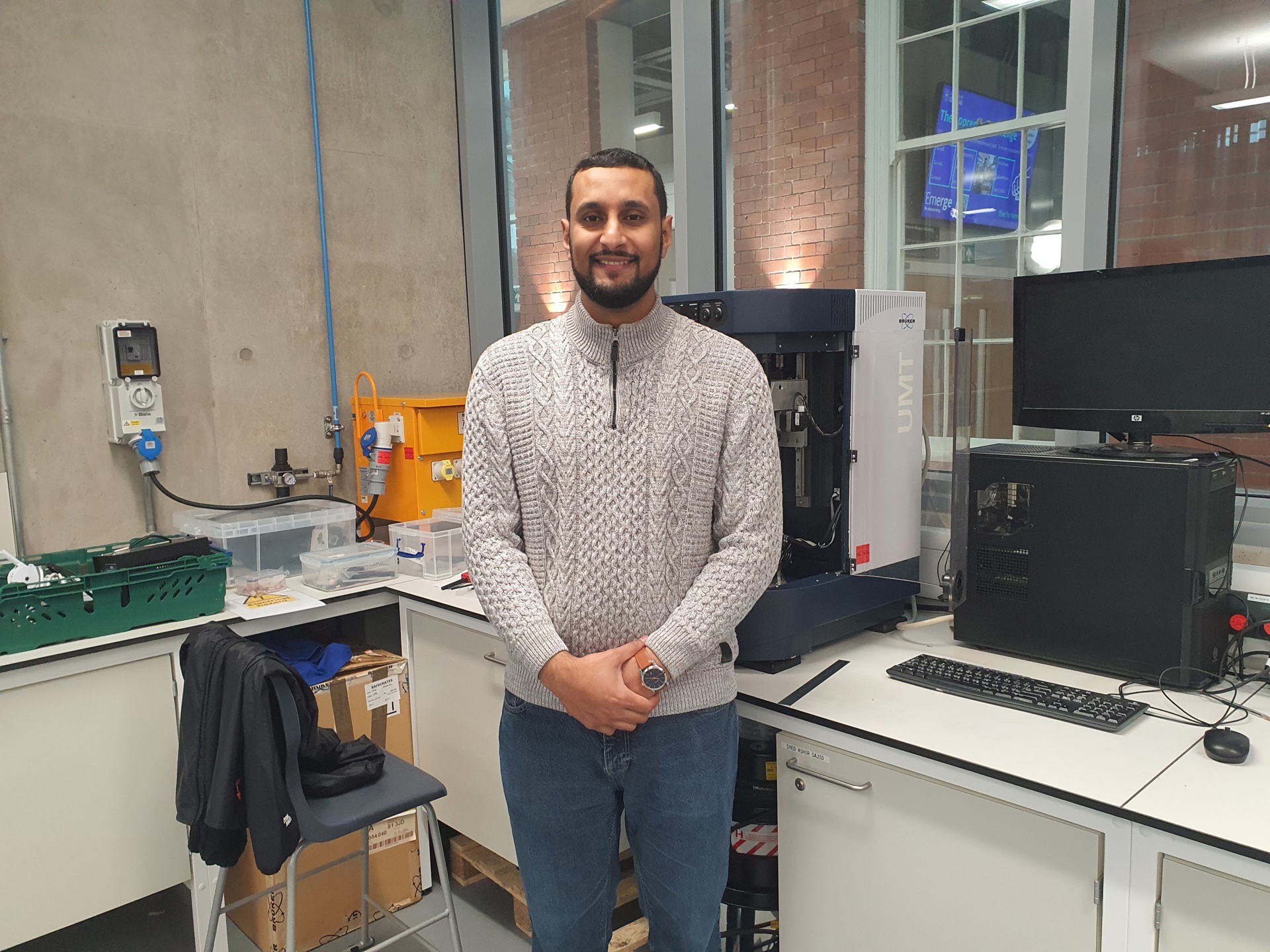
For Ahmed Mohamed, a PhD candidate at the University of Sheffield, improving how real systems behave in operation is not an abstract challenge. It is the starting point of his doctoral research. Through a doctoral project sponsored by John Crane and focused on dry gas seals, Ahmed is combining advanced simulation with experimental insight to improve durability, efficiency and long-term sustainability.
“I’m interested in understanding what really happens in operation,” Ahmed explains. “That is where modelling, simulation and experimental validation have to come together.”
A foundation built on mechanical engineering
Ahmed’s route into doctoral research was shaped by a strong grounding in mechanical engineering and a growing interest in how theory translates into real-world performance. He completed his BSc at Sheffield Hallam University and then progressed to an MSc at the University of Sheffield.
Across both degrees, he developed technical depth in disciplines that now underpin his doctoral research, including:
- Thermodynamics and heat transfer
- Materials science and tribology
- Fluid mechanics
- Computational modelling using finite element analysis (FEA) and computational fluid dynamics (CFD)
During his master’s studies, Ahmed found himself particularly drawn to simulation. While challenging, it provided a structured and quantitative approach to exploring how complex systems behave under varying conditions.
“Simulation forces you to think carefully about assumptions,” he says. “When you start validating those models experimentally, you see where they work well and where further refinement is needed. That process really motivated me to pursue a PhD.”
That balance between theory and validation became a defining feature of the research direction he chose.
Discovering dry gas seal technology in an industrial setting
Ahmed’s PhD forms part of a collaboration between the University of Sheffield and John Crane. Before starting the programme, he visited the company’s manufacturing and R&D site in Slough, where he met engineers and gained first-hand exposure to dry gas seal technology.
Seeing how dry gas seals are designed and manufactured—often to exceptionally tight tolerances—gave academic theory a practical context and a clear sense of purpose. It also highlighted how performance, reliability and sustainability increasingly shape engineering decisions.
“Dry gas seals might appear to be a small component, but they have a significant influence on overall system efficiency and reliability,” Ahmed reflects. “Seeing that manufacturing precision and understanding the operating environments confirmed that this was an area where research could make a genuine difference.”
Combined with the University of Sheffield’s established expertise in advanced simulation and modelling, including the use of tools such as ANSYS Fluent, the programme offered a strong platform for applied, industry-relevant research.
Researching dry gas seals with a system-level approach
Dry gas seals play a crucial role in compressors and turbomachinery used in various energy and industrial applications. Their performance directly affects uptime, efficiency and emissions.
Ahmed’s research focuses on improving the design and modelling of dry gas seals, with sustainability and durability guiding these efforts. Rather than analysing individual features in isolation, his work examines how design choices influence overall system behaviour and long-term performance.
The core focus of his research includes:
- Developing improved simulation models that reflect real operating conditions
- Linking computational results with experimental validation
- Understanding how design decisions influence efficiency and seal life
- Identifying opportunities to reduce emissions and improve efficiencies
By strengthening the link between modelling and real-world performance, the research supports more predictable operation, improved reliability and enhanced efficiency across demanding applications.
Connecting mechanical seal research to the clean energy transition
Although dry gas seals represent one small element within complex rotating equipment, their influence on energy efficiency and sustainability is significant. Minor inefficiencies at the seal level can contribute to increased energy consumption, reduced equipment life and greater operational risk over time.
By improving efficiency and durability through better design and modelling, Ahmed’s research supports broader sustainability objectives. Reducing inefficiency at the component level contributes to cleaner industrial processes and helps equipment to operate more reliably and with reduced costs-of-ownership as energy systems evolve.
Rather than treating sustainability as a separate design constraint, the research embeds it within engineering performance, aligning reliability, efficiency and environmental responsibility from the outset.
Learning through collaboration
One of the most rewarding aspects of Ahmed’s PhD to date has been learning from experts across both academia and industry. The early stages of the programme involved an in-depth literature review, providing valuable insights into existing dry gas seal designs, modelling approaches and operational challenges.
“Engaging with experienced engineers helps keep the research grounded,” Ahmed says. “It reinforces the importance of solving real problems, not just producing theoretical results.”
Looking ahead, he is preparing for specialist training in Manchester, where he expects to continue developing technical capability through structured, hands-on learning in an industrial context.
Advice for future PhD candidates
Drawing on his experience so far, Ahmed encourages students considering industry-linked PhDs to look beyond their immediate technical focus and adopt a broader perspective on their research.
His advice includes:
- Build strong professional connections early
- Develop a clear understanding of the overall system before focusing on technical details
- Look beyond individual components and consider the bigger picture
- Think creatively and remain open to different approaches
“Understanding the wider context makes it much easier to identify innovative and effective solutions as the research progresses,” he notes.
Looking ahead
After completing his PhD, Ahmed aims to establish himself as an expert in dry gas seals and sustainable engineering systems. He plans to apply and expand his knowledge across multiple industries, contributing to the development of energy-efficient and environmentally responsible technologies.
Turning research into impact
Ahmed Mohamed’s doctoral research highlights the value of collaboration between academia and industry. By focusing on dry gas seals—components that underpin the reliability and efficiency of critical equipment—his work shows how applied research can translate into real performance gains.
Through John Crane’s sponsorship and collaboration with the University of Sheffield, this research helps ensure that future mechanical seal technologies continue to evolve alongside the demands of cleaner, more efficient energy systems.
Learn more about John Crane’s sponsorship and collaboration with the University of Sheffield here.